
How to Repair Damaged Wallpaper: Complete DIY Guide for Every Damage Type
August 21, 2025
August 21, 2025
Damaged wallpaper doesn’t always mean expensive replacement. Whether you’re dealing with tears, bubbles, peeling edges, or stains, most wallpaper damage can be repaired effectively with the right techniques and materials. This comprehensive guide will walk you through professional-quality repair methods that save money while restoring your walls to pristine condition.
Assessing Your Wallpaper Damage
Before diving into repairs, proper damage assessment determines your success rate and helps you choose the most effective repair strategy.
Common Types of Wallpaper Damage
Understanding the specific type of damage you’re facing is crucial for selecting the appropriate repair method:
- Tears and rips typically occur from furniture contact, pet scratches, or accidental impacts. These range from small surface scratches to complete punctures through the wallpaper backing.
- Air bubbles and blisters form when wallpaper loses adhesion to the wall surface. Small bubbles usually contain trapped air, while larger blisters may indicate moisture issues or insufficient initial adhesive application.
- Peeling edges and corners are common in high-humidity areas like bathrooms and kitchens. This damage often signals underlying adhesive failure or moisture penetration behind the wallpaper.
- Stains and discoloration can result from water damage, grease splatter, or general aging. Surface stains are easiest to address, while deep discoloration may require patch repairs.
- Missing sections occur when wallpaper pieces have been completely removed, leaving bare wall patches that require careful pattern matching during repair.
When to Repair vs. Replace
Making the right decision between repair and replacement saves both time and money:
- Repair when: Damage covers less than 10% of the wall surface, the wallpaper is in otherwise good condition, you have matching material available, and the underlying wall structure is sound.
- Replace when: Damage is extensive (covering more than 25% of the wall), multiple damage types are present, the wallpaper is severely aged or faded, or underlying wall issues exist that require addressing.
- Consider partial replacement when: Damage is concentrated in one area, you can source matching wallpaper, and the repair would be highly visible in a prominent location.
Essential Tools and Materials for Wallpaper Repair
Success in wallpaper repair depends heavily on having the right tools and materials readily available.
Basic Repair Kit Components
- Wallpaper adhesive comes in several varieties. Vinyl wallpaper adhesive works for most modern wallpapers, while wheat paste adhesive suits traditional paper wallpapers. Pre-mixed adhesives offer convenience, while powder adhesives provide stronger bonds for challenging repairs.
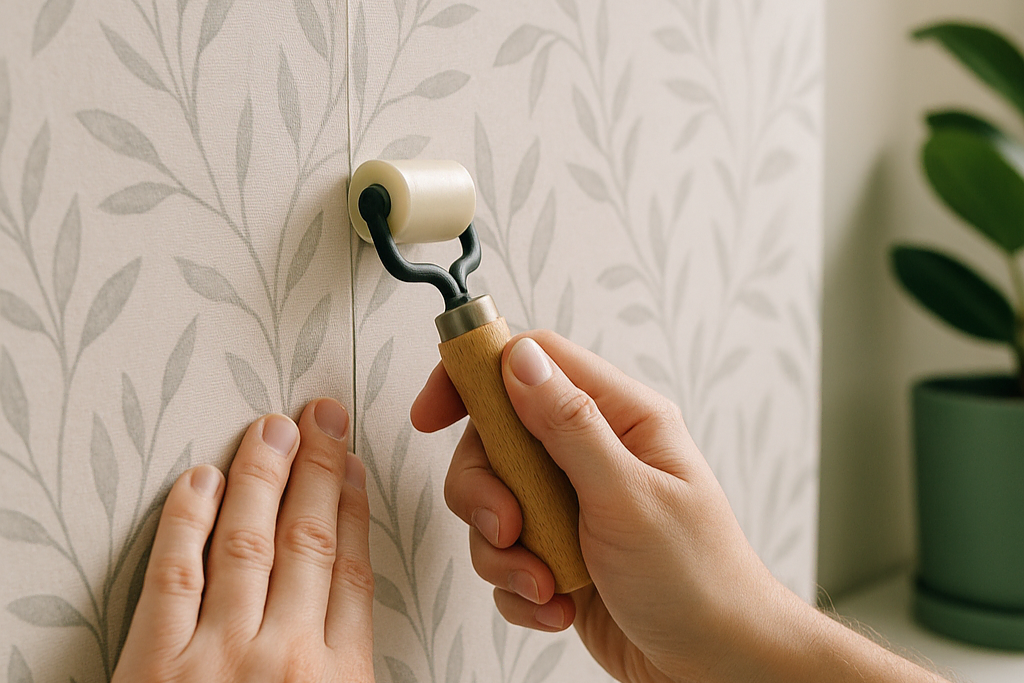
- Smoothing tools include plastic smoothing brushes for general use, bone folders for precise edge work, and seam rollers for achieving tight, invisible seams. Avoid metal tools that can damage wallpaper surfaces.
- Cutting implements should include sharp utility knives with replaceable blades, small scissors for detailed work, and metal straight edges for clean, precise cuts.
- Cleaning supplies encompass lint-free cloths, mild detergent solutions, and clean water for removing debris and excess adhesive during repairs.
Specialized Materials by Damage Type
- Patch repair materials include artist’s brushes for precise adhesive application, fine-grit sandpaper for edge preparation, and matching paint for touch-ups on painted walls beneath repairs.
- Seam rollers and brushes vary by wallpaper type. Soft rubber rollers work for delicate surfaces, while firmer rollers handle textured wallpapers. Natural bristle brushes prevent scratching during adhesive application.
- Colour-matching supplies include fabric dyes for minor colour adjustments, clear protective sprays for preserving repairs, and UV-resistant coatings for sun-exposed areas.