Industrial Painting in Vancouver
Industrial coatings do a different job than commercial or residential paint. On a factory floor or a piece of structural steel, the coating isn't primarily decorative — it's protecting the asset underneath from corrosion, wear, chemical exposure, or moisture, in an environment where failure means real cost: downtime, equipment damage, or a compliance issue that's harder to fix after the fact than it would have been to prevent.
Celestial Painting has been painting across Vancouver and the Lower Mainland for more than 25 years. This page covers what industrial painting actually involves, the kinds of facilities involved, and how we plan projects around a site that's often still operating. To learn more about who we are, see our background.
The stakes are different too. A missed spot on an office wall is a cosmetic issue. A missed spot on a corrosion-prone steel beam, or a floor coating that fails under regular forklift traffic, is a maintenance problem that shows up again — sooner, and usually at a worse time — if it isn't done properly the first time.
Request a Site Assessment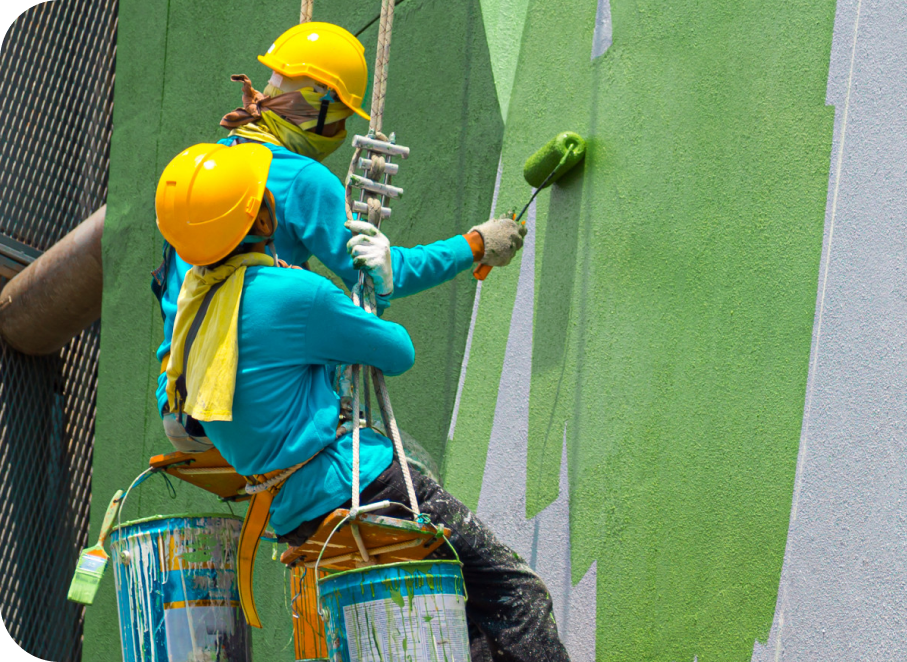
What Industrial Painting Includes
Industrial painting covers concrete floors, structural steel, equipment housings, warehouse interiors and exteriors, and corrosion-prone surfaces exposed to moisture, chemicals, or heavy wear. The right coating depends heavily on the surface and what it's exposed to:
Concrete floors
Common priority: Abrasion resistance, chemical resistance, safety line marking
Structural steel
Common priority: Corrosion protection, adhesion in exterior and exposed conditions
Equipment housings
Common priority: Durability under heat, vibration, or regular contact
Warehouse walls and ceilings
Common priority: Light reflectivity, low-maintenance finish, durability
Exterior industrial structures
Common priority: Weather and UV resistance, corrosion protection
We assess the specific surface, exposure conditions, and what the coating actually needs to withstand before recommending an approach — a floor coating and a structural steel coating solve different problems, even in the same building. This assessment step matters more here than in residential or commercial work, because the cost of getting it wrong is higher: a coating chosen for the wrong exposure conditions can fail within months instead of holding up for years.
For the weather and timing side of coating work on outside surfaces, see our exterior painting page.
The Kinds of Facilities We Work On
Factories and production facilities
Coatings that hold up to regular equipment contact, foot and vehicle traffic, and sometimes chemical exposure.
Warehouses and distribution centres
Floor coatings, wall and ceiling finishes, and often safety line marking as part of the same project.
Structural steel and infrastructure
Corrosion protection for exposed steel, both interior and exterior.
Light manufacturing and processing sites
Surface coatings selected around what the space actually handles day to day, from chemical exposure to regular equipment vibration.
Each of these comes with its own combination of surfaces, exposure conditions, and operational constraints, which is why we treat the site assessment as the step that actually determines the project — not a formality before a generic quote.
If your project is a standard office, retail space, or restaurant rather than a production or storage facility, our team built for offices and retail spaces is the better fit — the scheduling and product considerations are different.
Facility age and condition matter here more than in most other service categories. An older industrial building often has layers of previous coatings, areas of existing corrosion, or surfaces that were never properly coated in the first place — all of which change the prep work and product choice. We account for this during the site assessment rather than quoting a job before seeing the actual condition of the surfaces involved.
Working Within an Operating Facility
Most industrial coating projects happen while a facility is still running, at least partially. That changes how the work is planned:
- We follow site safety protocols and inductions required by the facility, not just our own standard process
- Scheduling around production windows — a planned shutdown, a slower shift, or a specific area taken offline temporarily, rather than assuming full access
- Coordination with facilities or operations management — industrial projects usually involve more stakeholders than a typical commercial repaint, often including maintenance, operations, and sometimes health and safety contacts all with a say in scheduling
- Clear communication about cure times — some industrial coatings need specific dry/cure conditions before an area is safe to bring back into use, and we plan the schedule around that rather than rushing it
- Minimizing impact on adjacent operations — even when one area is taken offline for coating work, the rest of the facility often needs to keep running, so containment and dust/odour management matter as much as the coating application itself
- Realistic timelines communicated early — if a project genuinely needs more time than a facility's preferred window allows, we'll say so upfront rather than promising a timeline we can't actually meet
What the Process Involves
1. Site assessment and consultation
We look at the surfaces involved, what they're exposed to, and your operational constraints — including any facility-specific safety requirements we'll need to follow.
2. Planning around operations
We work out timing with your facilities or operations contact — often this means a shutdown window, an off-shift schedule, or a phased approach by area.
3. Surface preparation
Industrial surfaces often need more intensive prep than commercial or residential work — degreasing, surface profiling, rust or scale removal — before any coating goes on, since coating over a poorly prepped surface is one of the most common causes of early failure. This step often takes longer than the coating application itself, and it's not a step worth rushing to hit a schedule.
4. Application
Coatings applied to the agreed areas within the agreed schedule, with appropriate cure time planned in rather than compressed to meet an unrealistic timeline. For larger facilities, this often happens in sections so the rest of the site stays operational.
5. Final inspection and sign-off
We review the finished areas with your facilities contact and confirm the coating has cured properly before the space goes back into full use.
A Few Things Worth Planning For
- Tell us what the surface is exposed to — chemicals, heavy vehicle traffic, moisture, heat — so the coating recommendation actually fits the conditions, not just the surface type
- Flag any compliance or safety-marking requirements (floor line marking, hazard colour coding) early, since these are often planned alongside the coating itself rather than as an afterthought
- Let us know about shutdown windows or slower production periods as early as possible — these windows are often the most efficient time to do the work and tend to get booked up
- If multiple contractors are working on-site simultaneously, flag this so we can coordinate scheduling and access rather than working around each other unplanned
If you're comparing contractors, our guide to picking the right commercial painting company in Vancouver covers what to ask before you decide. And if you're not sure a property is due for work, our article on signs a property is overdue for professional painting walks through what to look for.
Why Facilities Choose Celestial Painting
Experience with operating sites
More than 25 years of planning work around the way a site actually runs, rather than assuming it can simply shut down.
Surface-specific recommendations
Matching the coating approach to what the surface is actually exposed to, not a one-size-fits-all product.
Prep-first standards
The same emphasis on proper surface preparation that underlies every service we offer, applied to industrial-grade surfaces where the margin for error is smaller.
Clear scheduling
Built around your operational windows, not a generic timeline.
Industrial coating work is also, by nature, less frequent than a repaint — done properly, a facility coating should hold up for years under regular use, which makes the upfront assessment and prep work worth getting right the first time rather than treating it as a routine maintenance task to rush through.
See our full service list or browse completed projects.
Frequently Asked Questions
Do you work in facilities that are still operating?
Yes — most industrial projects happen while a facility is at least partially running. We plan around your operational schedule, including shutdown windows or phased access where needed.
What kinds of coatings do you use for concrete floors?
It depends on what the floor is exposed to — foot traffic, vehicle traffic, chemicals, or moisture all point toward different coating approaches. We assess this during the site visit rather than defaulting to one product.
Can you match our facility's safety colour coding or line marking?
Yes — if you can provide your facility's colour-coding standard, we can incorporate line marking and hazard coding into the project alongside the main coating work.
Do you handle structural steel corrosion protection?
Yes, both interior and exterior structural steel — corrosion protection needs vary by exposure conditions, which we assess as part of the estimate.
How do you handle site safety requirements?
We follow the specific safety protocols and inductions required by each facility — let us know what your site requires, including any orientation or documentation needed before our team can access the site, and we'll plan around it.
How long does an industrial coating project typically take?
It varies significantly by surface area, coating type, and required cure time — we'll give you a realistic timeline during the site assessment rather than a generic estimate.
Do you offer free estimates for industrial projects?
Yes — a site assessment and a clear scope and price before anything is booked, with no obligation.
Can you work around a planned shutdown window?
Yes — shutdown windows are often the most efficient time to do industrial coating work, since access isn't constrained by ongoing operations. Let us know the window as early as possible so we can plan around it; these windows tend to get booked up quickly once facilities announce their maintenance schedules.
What's the difference between industrial and commercial painting for a warehouse?
It depends on what the warehouse actually needs. A warehouse that's mostly office and light storage space is often closer to a commercial job — see our commercial painting page. A warehouse with heavy equipment traffic, chemical storage, or structural steel needing corrosion protection is closer to industrial work. We can help you figure out which fits during the estimate.
Ready to Protect Your Facility?
If your facility needs coating work — floors, structural steel, or a full facility refresh — reach out for a site assessment and we'll build a plan around your operational schedule and what your surfaces actually need to withstand. Tell us about the surfaces involved, what they're exposed to, and any scheduling constraints upfront, and we'll come back with a realistic scope and timeline rather than a generic quote.
Request a Site Assessment