
Essential Tools for Wallpaper Care: Guide for Homeowners
August 10, 2025
August 10, 2025
The difference between well-maintained wallpaper and neglected surfaces is dramatic. Wallpaper that receives regular care with appropriate tools can maintain its original appearance and adhesion for decades, while improper maintenance can lead to premature fading, peeling, and damage that requires costly replacement.
Professional wallpaper installers report that homeowners who invest in proper care tools see significantly fewer issues with seam separation, surface damage, and color degradation. The initial investment in quality tools typically pays for itself within the first year by preventing repair costs and extending replacement intervals.
Most wallpaper damage occurs not from age, but from improper cleaning techniques and inadequate tools. Using household cleaning products not designed for wallpaper, applying excessive moisture, or scrubbing with abrasive materials can cause irreversible harm. The right tools eliminate these risks while making maintenance tasks more efficient and effective.
Essential Wallpaper Cleaning Tools
Daily Maintenance Tools
The foundation of wallpaper care begins with daily maintenance tools that remove dust, prevent buildup, and catch potential issues early. Microfiber cloths represent the gold standard for wallpaper cleaning, but not all microfiber is created equal. Look for cloths with a GSM (grams per square meter) rating between 300-400, which provides optimal cleaning power without excessive friction that could damage delicate surfaces.
Soft-bristled brushes serve as your primary tool for textured wallpaper maintenance. Natural bristle brushes work best for grasscloth and fabric wallpapers, while synthetic bristles excel with vinyl and washable varieties. The ideal brush features bristles no longer than half an inch, preventing excessive pressure while allowing thorough dust removal from textured surfaces.
Vacuum attachments designed specifically for delicate surfaces complete your daily arsenal. The brush attachment should feature soft, natural bristles and variable suction control. Many homeowners make the mistake of using standard vacuum attachments, which can create enough suction to pull wallpaper away from walls or damage surface textures.
Deep Cleaning Equipment
When daily maintenance isn’t sufficient, deep cleaning equipment becomes essential. Steam cleaners designed for wallpaper use operate at lower temperatures and pressures than standard models, typically producing steam at 200-220°F rather than the 300°F+ of traditional steam cleaners. This temperature range effectively sanitizes and refreshes washable wallpaper without risking adhesive failure.
Specialized wallpaper cleaning solutions differ significantly from general-purpose cleaners. These formulations account for wallpaper’s porous nature and potential color sensitivity. Quality wallpaper cleaners maintain a pH between 6.5-7.5, preventing the alkaline damage that can occur with standard household cleaners.
pH-neutral cleaners represent the safest option for sensitive materials like silk wallpaper or hand-painted varieties. These cleaners remove dirt and stains without altering the chemical composition of natural fibers or affecting color stability. When selecting cleaners, always verify compatibility with your specific wallpaper type through manufacturer recommendations.
Stain Removal Tools
Effective stain removal requires targeted tools for different stain types. Spot cleaning kits designed for wallpaper typically include multiple solution types, applicator brushes, and blotting materials. These kits address common household stains like food spills, crayon marks, and fingerprints without spreading the stain or damaging surrounding areas.
Grease-cutting solutions formulated for wallpaper use enzymes rather than harsh detergents to break down oily stains. These solutions work more slowly than kitchen degreasers but prevent the surface damage and discoloration that aggressive cleaners can cause on wallpaper.
Ink and marker removal requires specialized solvents that dissolve ink without affecting wallpaper dyes or coatings. Alcohol-based removers work effectively on most ink types, but always test in an inconspicuous area first. Some wallpapers, particularly those with metallic elements, can be permanently damaged by alcohol-based products.
Wallpaper Repair and Restoration Tools
Basic Repair Kit Components
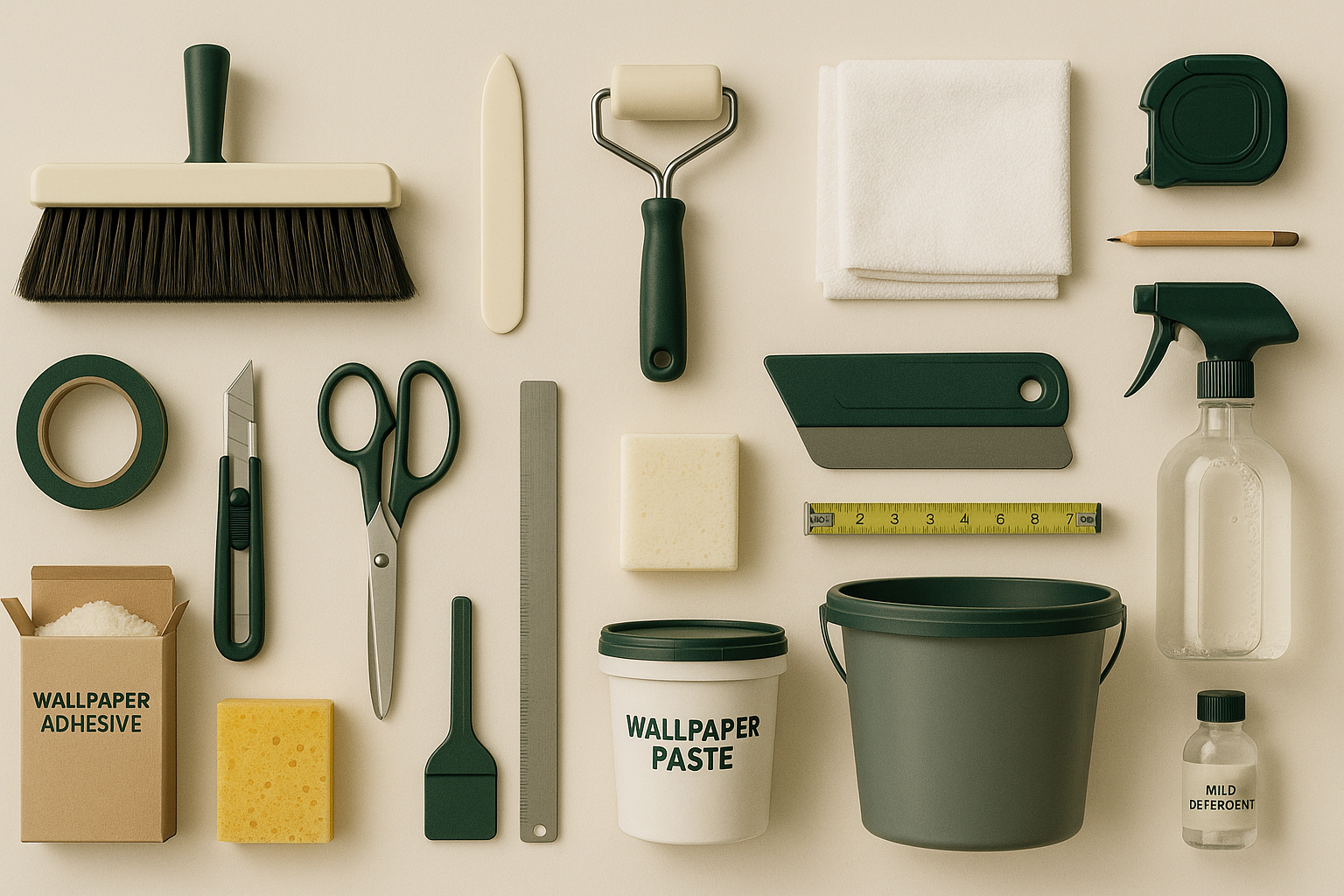
Every homeowner with wallpaper should maintain a basic repair kit containing wallpaper adhesive, seam rollers, and precision cutting tools. Wallpaper adhesive comes in several formulations, with vinyl adhesive for vinyl wallpapers, clay-based adhesive for traditional papers, and specialized formulations for specific materials like grasscloth or fabric.
Seam rollers serve multiple purposes beyond initial installation. These tools prove invaluable for addressing lifted edges, smoothing bubbles, and ensuring proper adhesion during repairs. Professional-quality seam rollers feature slightly rounded edges that prevent cutting or tearing while applying consistent pressure across seam lines.
Precision cutting tools include sharp utility knives with fresh blades, metal straightedges, and fine-point scissors. Dull blades can tear wallpaper rather than cutting cleanly, creating ragged edges that make repairs more visible. Replace utility knife blades frequently, as wallpaper dulls blades more quickly than other materials.
Advanced Repair Equipment
Professional-grade steamers for bubble removal operate at precisely controlled temperatures and steam output levels. These units allow for targeted application of steam to specific areas without oversaturating surrounding wallpaper. The controlled approach prevents adhesive failure in adjacent areas while effectively addressing localized issues.
Injection needles provide the most precise method for applying adhesive to specific problem areas. These tools allow you to inject adhesive directly behind lifted sections or bubbles without removing wallpaper sections. Medical-grade syringes with blunt-tip needles work well for this application, providing precise control over adhesive placement and quantity.
Texture matching tools become essential when dealing with heavily textured wallpapers. These specialized rollers and brushes recreate surface patterns during repairs, making patches virtually invisible. Professional installers often create custom texture tools using common materials like sea sponges or carved rollers to match specific patterns.